


Ngoài một số toán chịu trách nhiệm bảo vệ yếu nhân thuộc Bộ Tổng Tham Mưu và một số toạ độ bí mật được giao phó tại Biệt Khu Thủ Đô và các quận của Tỉnh Gia Định.


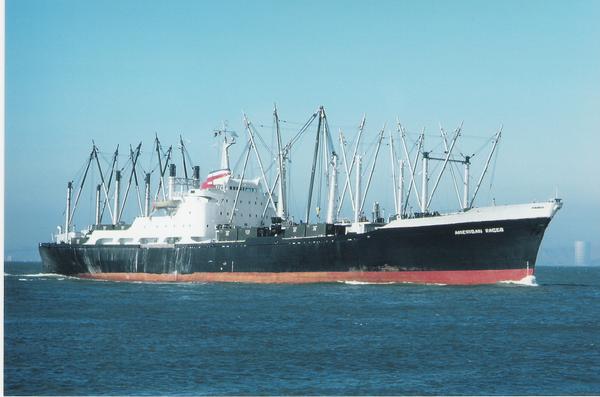
Chặng đầu tiên chiếc American Racer cập đến Đảo Guam, thuộc lãnh thổ của Hoa Kỳ thuộc Quần Đảo Thái Bình Dương nơi đây những căn lều dã chiến được dựng nên và cũng là trung tâm lập thủ tục cho ngưòi tỵ nạn như I94 đây là một loại thẻ đặc biệt cho ngưòi tỵ nạn như thẻ căn cước thời bấy giờ (không có hình) và có đóng dấu có thể làm việc tại Hoa Kỳ, nơi đây dấu tích của Căn cứ Không Quân Anderson và những phi vụ B52 oanh tạc trong chiến tranh Việt Nam. Sau khi thiết lập thủ tục và thẻ căn cước một số người tỵ nạn được đưa thẳng đến các trại tỵ nạn tại Hoa Kỳ.

Lúc bây giờ có 4 trại tiếp nhận ngưòi Tỵ nạn Cộng Sản Việt Nam chính là:


Eglin Air Force Base in Florida,
Fort Chaffee in Arkansas,
Fort Indiantown Gap in Pennsylvania
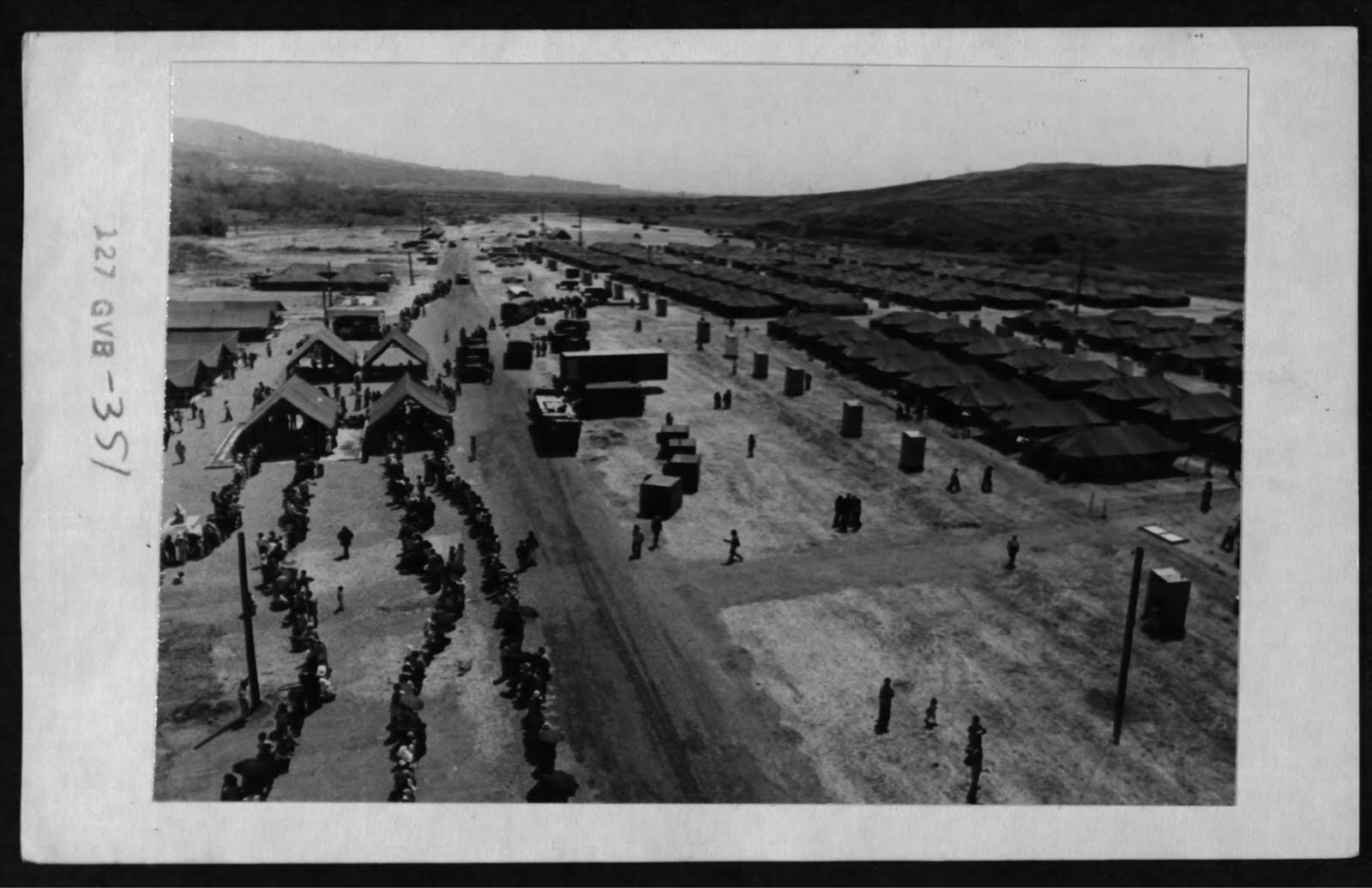
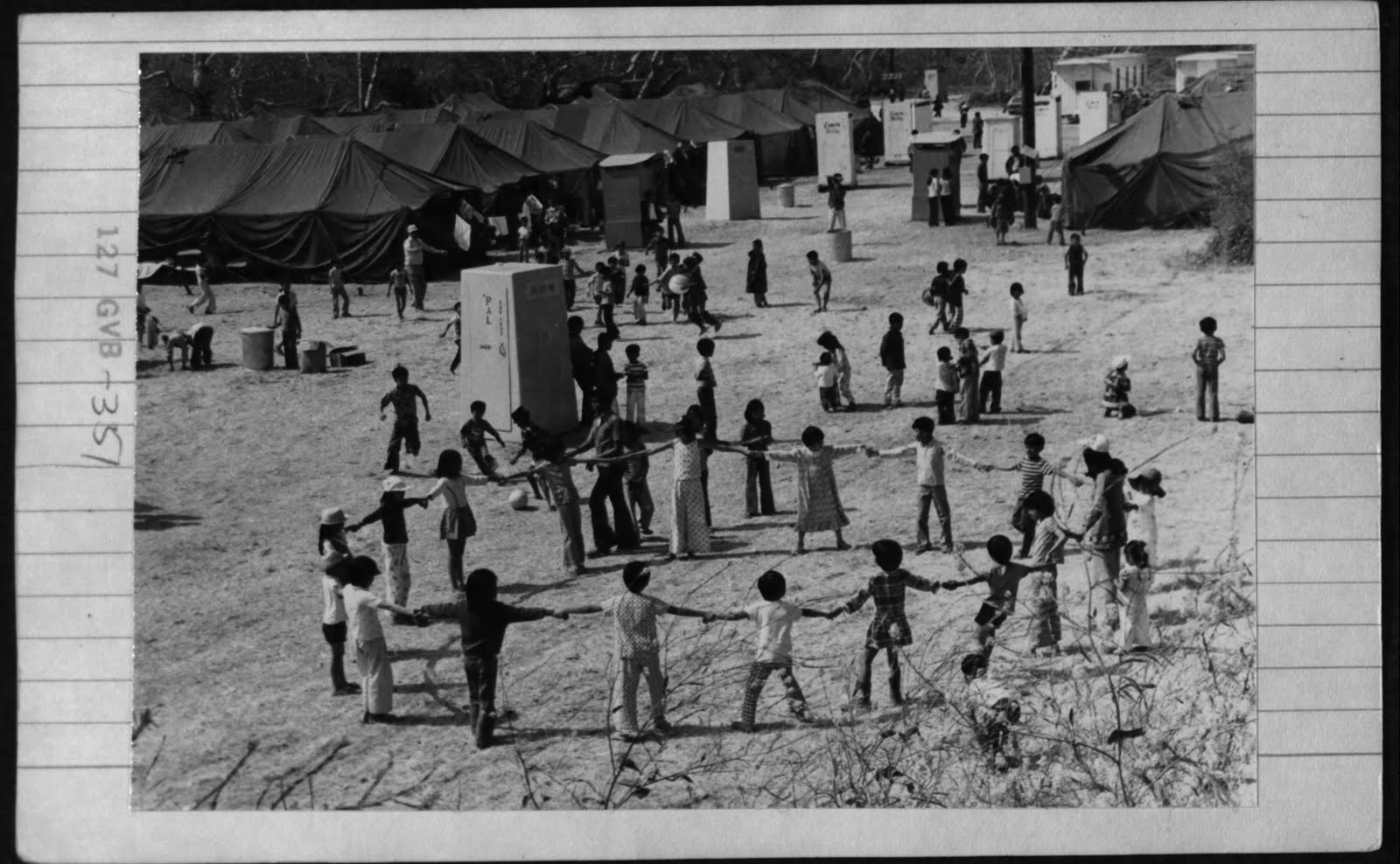
và trại lớn nhất là Camp Pendleton in California
Đã có 50,424 ngưòi đi qua trại nầy và có một lúc trại này đã tiếp nhận 19 ngàn ngưòi.
Tồng số ngưòi tỵ nạn Cộng Sản vào thời điểm 30 tháng 4 năm 1975 là 133,000 người và người tỵ nạn đầu tiên đến Hoa Kỳ đầu tiên vào ngày 2 tháng 5 năm 1975, riêng các em bé mồ côi Việt Nam và Cam Bốt đã được di chuyển bằng máy bay đến Căn Cứ Bộ Binh tại Presidio of San Francisco, California Fort Benning, Georgia và Fort Lewis, Washington State cũng như căn cứ Thủy Quân Lục Chiến Hoa Kỳ Camp Pendleton, California .

Tolstoy Foundation,
American Fund for Czechoslovak Refugees,
YMCA,
United States Catholic Conference (USCC),
Church World Services (CWS),
Lutheran Immigration Aid Society (LIRS),
Hebrew Immigrant Aid Society (HIAS),
International Rescue Committee (IRC),
World Relief Services,
American Council for Nationalities Services (ACNS)
và cơ quan cuối cùng là Persons Granted Asylum.
Hai trại tỵ nạn đông đảo anh em Sở Công tác Nha Kỹ Thuật là Fort Chaffee Tiểu bang Arkansas
Và Camp Pendleton Ocenside, California

(To Be Continue)




Fort Chaffee 1975 The Refugees

The Gates at Camp Pendleton Welcome the Vietnamese Refugee






TAI LIEU DI TAN

DEPARTMENT OF THE NAVY -- NAVAL HISTORICAL CENTER
805 KIDDER BREESE SE -- WASHINGTON NAVY YARD
WASHINGTON DC 20374-5060
Chapter 5: The Final Curtain, 1973 - 1975
During the period from 29 March 1973 to 30 April 1975, the Defense Attaché Office (DAO), Saigon, administered the American military assistance to the Republic of Vietnam. Limited by the Paris Agreement to 50 or fewer military personnel, the activity was staffed predominantly by civilians and contractors. The DAO was responsible for providing supplies and material to the 42,000-man Vietnamese Navy, which operated 672 amphibious ships and craft, 20 mine warfare vessels, 450 patrol craft, 56 service craft, and 242 junks. The quality of personnel in the naval service remained adequate over the two-year period. A drastic cut in U.S. financial support, however, hurt the navy's overall readiness. The U.S. Congress appropriated only $700 million for fiscal year 1975, forcing the Vietnamese Navy to reduce its overall operations by 50 percent and its river combat and patrol activities by 70 percent. To conserve scarce ammunition and fuel, Saigon laid up over 600 river and harbor craft and 22 ships. The enemy did not target the waterways during 1973 and 1974, but such would not be the case in 1975 when the coastal areas of South Vietnam became the war's main operational theater.

Naval Evacuation of I and II Corps
The final test of strength between the Republic of Vietnam and its Communist antagonists that many observers had long predicted occurred in the early months of 1975. Seeking to erode the government's military position in the vulnerable II Corps area, on 10 March Communist forces attacked Ban Me Thuot, the capital of isolated Darlac Province, and routed the South Vietnamese troops there. The debacle convinced President Nguyen Van Thieu that even the strategic Pleiku and Kontum Provinces to the north could not be held and must be evacuated. Accordingly, on the fifteenth, government forces and thousands of civilian refugees began an exodus toward Tuy Hoa on the coast but that degenerated into a panicked flight when the enemy interdicted the main road. The enemy dispersed or destroyed many of the South Vietnamese II Corps units in this catastrophe.
These events set off a chain reaction as the demoralized South Vietnamese troops abandoned port after port along the South Vietnamese coast to swiftly advancing North Vietnamese forces. Learning of the disaster in II Corps and confused by contradictory deployment orders from Saigon, the defenders of I Corps also began to crack. Giving up Hue on 25 March, Vietnamese troops retreated in disorder toward Danang. The Vietnamese Navy rescued thousands of men cut off on the coast southeast of Hue, but heavy weather and the general confusion limited the sealift's effectiveness. On the previous day (24 March) government units evacuated Tam Ky and Quang Ngai in southern I Corps and also streamed toward Danang. Simultaneously, the navy transported elements of the 2d Division from Chu Lai to Re Island 20 miles offshore. With five North Vietnamese divisions pressing the remnants of the South Vietnamese armed forces and hundreds of thousands of refugees into Danang, order in the city disintegrated. Looting, arson, and riot ruled the city as over two million people sought a way out of the ever-closing trap.
During this period of growing chaos in South Vietnam, the U.S. Navy readied for evacuation operations. On 24 March, the Military Sealift Command (MSC), formerly the Military Sea Transportation Service, dispatched the following tugs, pulling a total of six barges, from Vung Tau toward Danang:
Asiatic Stamina
Chitose Maru
Osceola
Pawnee
Shibaura Maru
On 25 March, the following ships were alerted for imminent evacuation operations in South Vietnam:

SS American Racer
SS Green Forest
SS Green Port
SS Green Wave
SS Pioneer Commander
SS Pioneer Contender
SS Transcolorado
USNS Greenville Victory
USNS Sgt Andrew Miller
USNS Sgt. Truman Kimbro
Noncombatants were chosen for the mission because the Paris Agreement prohibited the entry of U.S. Navy or other military forces into the country.
With the arrival at Danang of Pioneer Contender on 27 March, the massive U.S. sea evacuation of I and II Corps began. During the next several days four of the five barge-pulling tugs and Sgt. Andrew Miller, Pioneer Commander, and American Challenger put in at the port. The vessels embarked U.S. Consulate, MSC, and other American personnel and thousands of desperate Vietnamese soldiers and civilians. When the larger ships were filled to capacity with 5,000 to 8,000 passengers, they individually sailed for Cam Ranh Bay further down the coast. By 30 March order in the city of Danang and in the harbor had completely broken down. Armed South Vietnamese deserters fired on civilians and each other, the enemy fired on the American vessels and sent sappers ahead to destroy port facilities, and refugees sought to board any boat or craft afloat. The hundreds of vessels traversing the harbor endangered the safety of all. Weighing these factors, the remaining U.S. and Vietnamese Navy ships loaded all the people they could and steamed for the south. MSC ships carried over 30,000 refugees from Danang in the four-day operation. American Challenger stayed offshore to pick up stragglers until day's end on 30 March, when the North Vietnamese overran Danang.
In quick succession, the major ports in II Corps fell to the lightly resisted Communist advance. Hampered by South Vietnamese shelling of Qui Nhon, Pioneer Commander, Greenville Victory, Korean-flag LST Boo Heung Pioneer, and three tugs were unable to load evacuees at this city, which fell on 31 March. The speed of the South Vietnamese collapse and the enemy's quick exploitation of it limited the number of refugees rescued from Tuy Hoa and Nha Trang. Before the latter port fell on 2 April, however, Boo Heung Pioneer and Pioneer Commander brought 11,500 passengers on board and put out to sea.
Initially, Cam Ranh Bay was chosen as the safe haven for these South Vietnamese troops and civilians transported by MSC. But, even Cam Ranh Bay was soon in peril. Between 1 and 4 April, many of the refugees just landed were reembarked for further passage south and west to Phu Quoc Island in the Gulf of Siam. Greenville Victory, Sgt. Andrew Miller, American Challenger, and Green Port each embarked between 7,000 and 8,000 evacuees for the journey. Pioneer Contender sailed with 16,700 people filling every conceivable space from stem to stern. Crowding and the lack of sufficient food and water among the 8,000 passengers on board Transcolorado led a number of armed Vietnamese marines to demand they be discharged at the closer port of Vung Tau. The ship's master complied to avoid bloodshed, but this crisis highlighted the need for the Navy to provide better security.
As the magnitude of the calamity in I and II Corps became apparent, the Seventh Fleet deployed elements of the Amphibious Task Force (Task Force 76) to a position off Nha Trang. Because of the political restrictions on the use of American military forces in South Vietnam and the availability of MSC resources, however, Washington limited the naval contingent, then designated the Refugee Assistance Task Group (Task Group 76.8), to a supporting role. For the most part, this entailed command coordination, surface escort duties, and the dispatch of 50-man Marine security details to the MSC flotilla at sea. By 2 April, the task group--Dubuque, Durham (LKA 114), Frederick (LST 1184), and the Task Force 76 flagship Blue Ridge (LCC 19)--was monitoring operations at Cam Ranh Bay and Phan Rang. That same night the first Marine security force to do so boarded Pioneer Contender. A second contingent was airlifted to Transcolorado on the fourth. Dissatisfied with the condition of reception facilities on Phu Quoc and ill-tempered after the arduous passage south, armed passengers in Greenville Victory forced the master to sail to Vung Tau. Guided missile cruiser Long Beach (CGN 9) and escort Reasoner (DE 1063) intercepted the ship and stood by to aid the crew, but the voyage and debarkation of passengers proceeded uneventfully. In addition, Commander Task Group 76.8 immediately concentrated Dubuque, guided missile destroyer Cochrane (DDG 21), storeship Vega (AF 59), and the three ships of Amphibious Ready Group Alpha at Phu Quoc to position security detachments on each of the MSC vessels and to resupply the refugees with food, water, and medicines. Naval personnel also served as translators to ease the registration process. By 10 April, all ships at Phu Quoc were empty, thus bringing to a close the intracoastal sealift of 130,000 U.S. and South Vietnamese citizens. With stabilization of the fighting front at Xuan Loc east of Saigon and the Communists preparation for the final offensive, the need to evacuate by sea diminished. By the fourteenth all naval vessels had departed the waters off South Vietnam and returned to other duties.
Eagle Pull
Meanwhile, the Seventh Fleet focused its attention on Cambodia, in imminent danger of falling to the Communist Khmer Rouge guerrillas. Since 1970, the United States had aided the government of President Lon Nol in its struggle with the indigenous enemy and with North Vietnamese forces arrayed along the border with South Vietnam. The American support included a bombing campaign launched from Navy carriers and Air Force bases as far away as Guam and the delivery to Phnom Penh of arms, ammunition, and essential commodities through airlift and Mekong River convoy. Material assistance to the 6,000-man Cambodian Navy included the transfer of coastal patrol craft, PBRs, converted amphibious craft for river patrol and mine warfare, and auxiliary vessels. Despite this aid, by early 1975 the Communists in Cambodia controlled every population center but Phnom Penh, the capital. As the enemy tightened his ring around the city, the resistance of Cambodian government forces began to crumble.
Concluding that it was only a matter of time before all was lost in Cambodia, American leaders prepared to evacuate American and allied personnel from Phnom Penh. Fleet commanders revised and updated long-standing plans and alerted their forces for this special mission, designated Operation Eagle Pull. On 3 March 1975, Amphibious Ready Group Alpha (Task Group 76.4), and the 31st Marine Amphibious Unit (Task Group 79.4) embarked and arrived at a designated station off Kompong Som (previously Sihanoukville) in the Gulf of Siam. By 11 April, the force consisted of amphibious ships Okinawa, Vancouver, and Thomaston (LSD 28), escorted by Edson (DD 946), Henry B. Wilson (DDG 7), Knox (DE 1052), and Kirk (DE 1087). In addition, Hancock disembarked her normal complement of fixed-wing aircraft and took on Marine Heavy Lift Helicopter Squadron (HMH) 463 for the operation. Anticipating the need to rescue as many as 800 evacuees, naval leaders decided that they needed all of the squadron's 25 CH-53, CH-46, AH-1J, and UH-1E helicopters and Okinawa's 22 CH-53, AH-1J, and UH-1Es of HMH-462. The amphibious group also carried the 2d Battalion, 4th Marines, which would defend the evacuation landing zone near the U.S. Embassy, and reinforced naval medical-surgical teams to care for any casualties. Land-based U.S. Air Force helicopters and tactical aircraft were also on hand to back up the naval effort. Commander U.S. Support Activities Group/7th Air Force (COMUSSAG) was in overall command of the evacuation operation.
On 7 April 1975, the American command put Amphibious Ready Group Alpha on three-hour alert and positioned the force off the Cambodian coast. In the early morning hours of 12 April Washington ordered execution of the daring mission. At 0745 local time, Okinawa began launching helicopters in three waves to carry the 360-man Marine ground security force to the landing zone. One hour later, after traversing 100 miles of hostile territory, the initial wave set down near the embassy and the Marines quickly established a defensive perimeter.
Within the next two hours, U.S. officials assembled the evacuees and quickly loaded them on Okinawa and Hancock helicopters. Because many already had left Cambodia by other means prior to the twelfth, the evacuees numbered only 276. The group included U.S. Ambassador John Gunther Dean, other American diplomatic personnel, the acting president of Cambodia, senior Cambodian government leaders and their families, and members of the news media. In all, 82 U.S., 159 Cambodian, and 35 other nationals were rescued.
By 1041 all the evacuees had been lifted out, and little more than one-half hour later the ground security force also was airborne and heading out to sea. At 1224 all aircraft and personnel were safely on board Amphibious Ready Group Alpha ships. Although one Khmer Rouge 75-millimeter shell landed near the embassy landing zone, no casualties were suffered during the entire operation. The following day, task group helicopters flew the evacuated personnel to Thailand and the naval force set sail for Subic Bay. Thus through detailed planning, preparation, and precise execution, the joint evacuation force successfully accomplished the military mission in Cambodia.
The Fall of South Vietnam
The experience gained in Operation Eagle Pull and in the refugee evacuations from South Vietnam's I and II Corps served the fleet well when the Republic of Vietnam, after 20 years of struggle, collapsed under the Communist onslaught. During the latter half of April, U.S. naval leaders prepared ships and men for the final evacuation of American and allied personnel from South Vietnam. The ships of the MSC flotilla were cleaned, restocked with food, water, and medicine; and deployed off Vung Tau in readiness. In addition, Marine security detachments embarked in each of the vessels and prepared to disarm boarding refugees and ensure order. Rincon (T-AOG-77) stood by to provide fuel to Vietnamese and American ships making the exodus from South Vietnam's waters.
The Seventh Fleet also marshalled its forces in the Western Pacific. Between 18 and 24 April 1975, with the loss of Saigon imminent, the Navy concentrated off Vung Tau a vast assemblage of ships under Commander Task Force 76.

Task Force 76
Blue Ridge (command ship)
Task Group 76.4 (Movement Transport Group Alpha)
Okinawa
Vancouver
Thomaston
Peoria (LST 1183)
Task Group 76.5 (Movement Transport Group Bravo)
Dubuque
Durham
Frederick
Task Group 76.9 (Movement Transport Group Charlie)
Anchorage (LSD 36)
Denver (LPD 9)
Duluth (LPD 6)
Mobile (LKA 115)
 The task force was joined by Hancock and Midway, carrying Navy, Marine, and Air Force helicopters; Seventh Fleet flagship Oklahoma City; amphibious ships Mount Vernon (LSD 39), Barbour County (LST 1195), and Tuscaloosa (LST 1187); and eight destroyer types for naval gunfire, escort, and area defense. The Enterprise and Coral Sea carrier attack groups of Task Force 77 in the South China Sea provided air cover while Task Force 73 ensured logistic support. The Marine evacuation contingent, the 9th Marine Amphibious Brigade (Task Group 79.1), consisted of three battalion landing teams, four helicopter squadrons, support units, and the deployed security detachments.
After a dogged defense at Xuan Loc, the South Vietnamese forces defending the approaches to Saigon finally gave way on 21 April. With the outcome of the conflict clear, President Thieu resigned the same day. On the 29th, North Vietnamese and Viet Cong forces closed on the capital, easily pushing through the disintegrating Republic of Vietnam Armed Forces. Although U.S. and South Vietnamese leaders had delayed ordering an evacuation, for fear of sparking a premature collapse, the time for decision was now at hand.
At 1108 local time on 29 April 1975, Commander Task Force 76 received the order to execute Operation Frequent Wind (initially Talon Vise), the evacuation of U.S. personnel and Vietnamese who might suffer as a result of their past service to the allied effort. At 1244, from a position 17 nautical miles from the Vung Tau Peninsula, Hancock launched the first helicopter wave. Over two hours later, these aircraft landed at the primary landing zone in the U.S. Defense Attache Office compound in Saigon. Once the ground security force (2d Battalion, 4th Marines) established a defensive cordon, Task Force 76 helicopters began lifting out the thousands of American, Vietnamese, and third-country nationals. The process was fairly orderly. By 2100 that night, the entire group of 5,000 evacuees had been cleared from the site. The Marines holding the perimeter soon followed.
The situation was much less stable at the U.S. Embassy. There, several hundred prospective evacuees were joined by thousands more who climbed fences and pressed the Marine guard in their desperate attempt to flee the city. Marine and Air Force helicopters, flying at night through ground fire over Saigon and the surrounding area, had to pick up evacuees from dangerously constricted landing zones at the embassy, one atop the building itself. Despite the problems, by 0500 on the morning of 30 April, U.S. Ambassador Graham Martin and 2,100 evacuees had been rescued from the Communist forces closing in. Only two hours after the last Marine security force element was extracted from the embassy, Communist tanks crashed through the gates of the nearby Presidential Palace. At the cost of two Marines killed in an earlier shelling of the Defense Attaché Office compound and two helicopter crews lost at sea, Task Force 76 rescued over 7,000 Americans and Vietnamese.
Meanwhile, out at sea, the initial trickle of refugees from Saigon had become a torrent. Vietnamese Air Force aircraft loaded with air crews and their families made for the naval task force. These incoming helicopters (most fuel-starved) and one T-41 trainer complicated the landing and takeoff of the Marine and Air Force helicopters shuttling evacuees. Ships of the task force recovered 41 Vietnamese aircraft, but another 54 were pushed over the side to make room on deck or ditched alongside by their frantic crews. Naval small craft rescued many Vietnamese from sinking helicopters, but some did not survive the ordeal.
This aerial exodus was paralleled by an outgoing tide of junks, sampans, and small craft of all types bearing a large number of the fleeing population. MSC tugs Harumi, Chitose Maru, Osceola, Shibaura Maru, and Asiatic Stamina pulled barges filled with people from Saigon port out to the MSC flotilla. There, the refugees were embarked, registered, inspected for weapons, and given a medical exam. Having learned well from the earlier operations, the MSC crews and Marine security personnel processed the new arrivals with relative efficiency. The Navy eventually transferred all Vietnamese refugees taken on board naval vessels to the MSC ships.
Another large contingent of Vietnamese was carried to safety by a flotilla of 26 Vietnamese Navy and other vessels. These ships concentrated off Son Island southwest of Vung Tau with 30,000 sailors, their families, and other civilians on board.
On the afternoon of 30 April, Task Force 76 and the MSC group moved away from the coast, all the while picking up more seaborne refugees. This effort continued the following day. Finally, when this human tide ceased on the evening of 2 May, Task Force 76, carrying 6,000 passengers; the MSC flotilla of Sgt Truman Kimbro, Sgt Andrew Miller, Greenville Victory, Pioneer Contender, Pioneer Commander, Green Forest, Green Port, American Challenger, and Boo Heung Pioneer, with 44,000 refugees; and the Vietnamese Navy group set sail for reception centers in the Philippines and Guam. Thus ended the U.S. Navy's role in the 25-year American effort to aid the Republic of Vietnam in its desperate fight for survival.
 The final test of strength between the Republic of Vietnam and its Communist antagonists that many observers had long predicted occurred in the early months of 1975. Demoralized South Vietnamese troops abandoned port after port along the South Vietnamese coast to swiftly advancing North Vietnamese forces. With five North Vietnamese divisions pressing the remnants of the South Vietnamese armed forces and hundreds of thousands of refugees into Danang, order in the city disintegrated. During this period of growing chaos in South Vietnam, the U.S. Navy readied for evacuation operations. On 25 March 1975, a number of ships were alerted for imminent evacuation operations in South Vietnam. Noncombatants were chosen for the mission because the Paris Agreement prohibited the entry of US Navy or other military forces into the country.
With the arrival at Danang of Pioneer Contender on 27 March 1975, the massive U.S. sea evacuation of I and II Corps began. During the next several days four of the five barge-pulling tugs and Sgt. Andrew Miller, Pioneer Commander, and American Challenger put in at the port. The vessels embarked U.S. Consulate, MSC, and other American personnel and thousands of desperate Vietnamese soldiers and civilians. When the larger ships were filled to capacity with 5,000 to 8,000 passengers, they individually sailed for Cam Ranh Bay further down the coast. Hampered by South Vietnamese shelling of Qui Nhon, Pioneer Commander, Greenville Victory, Korean-flag LST Boo Heung Pioneer, and three tugs were unable to load evacuees at this city, which fell on 31 March. The speed of the South Vietnamese collapse and the enemy's quick exploitation of it limited the number of refugees rescued from Tuy Hoa and Nha Trang. Before the latter port fell on 2 April, however, Boo Heung Pioneer and Pioneer Commander brought 11,500 passengers on board and put out to sea.
On the evening of 2 May 1975 the MSC flotilla of Sgt Truman Kimbro, Sgt Andrew Miller, Greenville Victory, Pioneer Contender, Pioneer Commander, Green Forest, Green Port, American Challenger, and Boo Heung Pioneer, with 44,000 refugees, set sail for reception centers in the Philippines and Guam. Thus ended the 25-year American effort to aid the Republic of Vietnam in its fight for survival.


http://www.npr.org/templates/story/story.php?storyId=129484369&sc=17&f=1001
Forgotten Ship: A Daring Rescue As Saigon Fell
by Joseph Shapiro and Sandra Bartlett
- August 31, 2010
First of three parts
For Americans, the lasting image of the end of the Vietnam War came from the nightly news. On April 29, 1975, television showed the evacuation of Saigon as U.S. Marine helicopters swooped down to the U.S. Embassy and the roof of a nearby CIA safe house to rescue the last 1,000 Americans in the city and some 6,000 Vietnamese and their families who worked for them.
But there was another evacuation that didn't get as much attention. Tens of thousands of Vietnamese found other ways to escape in those frenzied few days. They left in boats and helicopters and headed to the South China Sea. They didn't know if North Vietnamese jets would sink their boats or shoot the helicopters out of the sky.
They did know that the U.S. Navy's 7th Fleet was out there, somewhere, and they headed out to the ocean hoping to be rescued.
One of those U.S. Navy ships was a small destroyer escort, the USS Kirk. As the evacuation began, the Kirk's military mission was to shoot down any North Vietnamese jets that might try to stop the Marine helicopters. The North Vietnamese planes never came.
The approximately 260 officers and men of the USS Kirk weren't prepared for what happened next.
Scores of South Vietnamese military helicopters filled the horizon.
"It looked like bees flying all over the place. And they were just going due east, trying to find someplace to land," said Paul Jacobs, the captain of the Kirk.
Desperate, Looking For A Place To Land
One of the sailors who preserved details of the scene was Hugh Doyle, the Kirk's chief engineer. When he had free time, he would return to his stateroom and sit on his bunk or at a small pull-down desk and dictate cassette tapes of daily events to send home to his wife, Judy, and three children.
His surprise and excitement are evident in the tapes.
"We looked up out on the horizon, and pretty soon all you could see were helicopters. And they came in and it was incredible. I don't think I'll ever see anything like it again," said Doyle, now retired and living in Rhode Island.
The South Vietnamese military helicopters were packed with people -- pilots and their family and friends. And now, as some of the choppers were precariously low on fuel, the pilots were looking for a place to land. Dozens of UH-1 Huey helicopters flew past the Kirk heading for the larger aircraft carriers. The Kirk had only a small flight deck.
Jacobs, the Kirk's captain, wanted in on the action, so he ordered his men to try to make contact with the helicopters and invite one to land.
'Humans More Important Than Hardware'
But the officers and men of the Kirk weren't sure that the South Vietnamese pilots had the skill to land on a moving flight deck.
"Most of the Vietnam pilots had never landed on a ship before. Almost to a man they were army pilots and they typically landed either at fire zones, at little clearings in the brush, or at an airport," recalled Don Cox, an anti-submarine-equipment officer on the Kirk, who is now an engineer for a missile defense company in Arizona.
The sailors stood on the landing deck and directed the first helicopter in. They unloaded its passengers and directed a second helicopter in. There we now several others buzzing overhead waiting to land.
"I believe it was the third aircraft that landed and chopped the tail off the second aircraft that had landed. There was still helicopters circling wanting to land. There was no room on our deck so we just started pushing helicopters overboard. We figured humans were much more important than the hardware," Cox said.
One or two sailors would jump into the helicopter and grab whatever hardware they could find -- batteries, radios -- as other sailors were bouncing and pushing the machine toward the edge of the deck and over into the sea.
These scenes were repeated on other Navy ships. Helicopters would land, refugees would jump off and sailors would quickly push the helicopters overboard to make room for more. That happened on large ships, including the USS Hancock and USS Midway, both aircraft carriers, and the USS Blue Ridge, the headquarters ship for the Navy's 7th Fleet. It also happened on other smaller ships, like the USS Cook, another destroyer escort like the Kirk.
'Catching Babies Like Basketballs'
Amid the chaos, a larger helicopter moved toward the Kirk. It was a Chinook CH-47, with two rotors that would tear the ship apart if it tried to land. The sailors made frantic signals telling the pilot he couldn't land. The pilot got the message but he was determined to unload his passengers.
Doyle described the scene to Judy in his cassette tape recording.
"Picture this, we're steaming along at about 5 knots. And this huge airplane comes in and hovers over, over the fantail, opened up its rear door, and starts dropping people out of it. It's about 15 feet off the fantail! There's American sailors back on the fantail, catching babies like basketballs!" he said at the time.
A young mother in the helicopter -- the wife of the pilot -- dropped her three young children, including her 10-month-old baby daughter.
Kent Chipman, a 21-year-old Texan, was one of the sailors who ran under the helicopter to catch the people who jumped out. "I remember the baby coming out," he recalled. "You know, there was no way that we were going to let them hit the deck or drop them. We caught them."
A Miraculous Escape
Once the passengers were out of the big Chinook, the co-pilot jumped to the deck. But now the pilot was running out of fuel and surrounded by flat, blue ocean. He flew about 60 yards from the Kirk.
The sailors could see the pilot in the cockpit taking off his clothes as he hovered the aircraft. They watched as he leaned the helicopter to the left and jumped out the right-hand side into the water.
"Soon as the blades hit the water, they exploded -- there were small pieces, but there were also pieces, probably 10, 15 feet long, big pieces go flying out. It sounded like a giant train wreck, you know, in slow motion and it's loud, you know, wind is blowing everywhere," said Chipman, who then worked as a machinist's mate keeping the ship's engine running and who today helps operate a water purification plant in Longview, Texas.
Chipman and the others on deck assumed the pilot had died as the helicopter exploded in the water. But then the man came to the surface and Chipman was thrilled. "To see that kind of destruction, you think this guy just sacrificed his life. But he popped right out of the water and it was amazing."
Excited sailors from the Kirk dove into the water to save the pilot, but others -- already in the water in a small boat -- got to him first and brought him back to the Kirk.
The pilot and his family were among some 200 refugees rescued from 16 helicopters by the Kirk's crew over a day and a half. The sailors looked after their Vietnamese visitors, over half of whom were women, children and babies. They put up tarps on the deck so they would have some shelter from the blazing sun. They distributed food and water and played games with the children. The ship's crew found themselves changing diapers, treating wounds and giving comfort.
On the second day, the refugees were moved to a larger transport ship.
"These people were coming out of there with nothing. Whatever they had in their pockets or hands. Some of them had suitcases; some of them had a bag," Chipman says. "You could tell they'd been in a war. They were still wounded. There were people young, old, army guys with the bandages on their head, arms -- you could tell they'd been in a fight."
Heroism Gives Vietnamese Chance At New Lives
But the Kirk's mission was about to change -- and suddenly. The rescue of the refugees from those helicopters was just a start. The ship and its crew would eventually help save 20,000 to 30,000 Vietnamese refugees fleeing aboard the vessels of the South Vietnamese navy.
It's one of the greatest humanitarian missions in the history of the U.S. Navy, but it's a story that has largely gone untold until recently, lost in the bitterness over the Vietnam War.
Most of the South Vietnamese saved by the Kirk eventually moved to camps in the United States and then resettled in communities across the country.
The officers and men of the Kirk never knew the names -- with a few exceptions -- of the men, women and children they had rescued.
But over the past decade, the crew members started getting together at reunions. They always found themselves marveling at the masterful airmanship of the pilot of the Chinook. The crew started to wonder what happened to that pilot, his family and the others they helped save.
Last year, Jacobs -- along with Jan Herman, a historian with the Navy's Bureau of Medicine who is now documenting the story of the Kirk -- gave an interview to a Vietnamese television show in Virginia. They talked of wanting to find that pilot.
It didn't take long for word of their search to spread in the community of Vietnamese now established across America. And that's how Ba Nguyen and his family were found. Nguyen and his wife, now American citizens, live in Seattle, where both worked for the aerospace giant Boeing.
The Kirk crew held a reunion this summer outside Washington, D.C., and invited Nguyen and his family. The pilot came, pushed in his wheelchair into the ballroom by his wife and children.
The Kirk crew surprised Nguyen by honoring him, and pinning an Air Medal on his sport coat. The medal, presented on behalf of the USS Kirk alumni association, is given by the U.S. military to note heroic feats of airmanship.
"This is our story," said his son Miki Nguyen, who was 6 years old at the time of the rescue. "This is how we started in America." [Copyright 2010 National Public Radio]
To learn more about the NPR iPhone app, go to
http://iphone.npr.org/recommendnprnews


